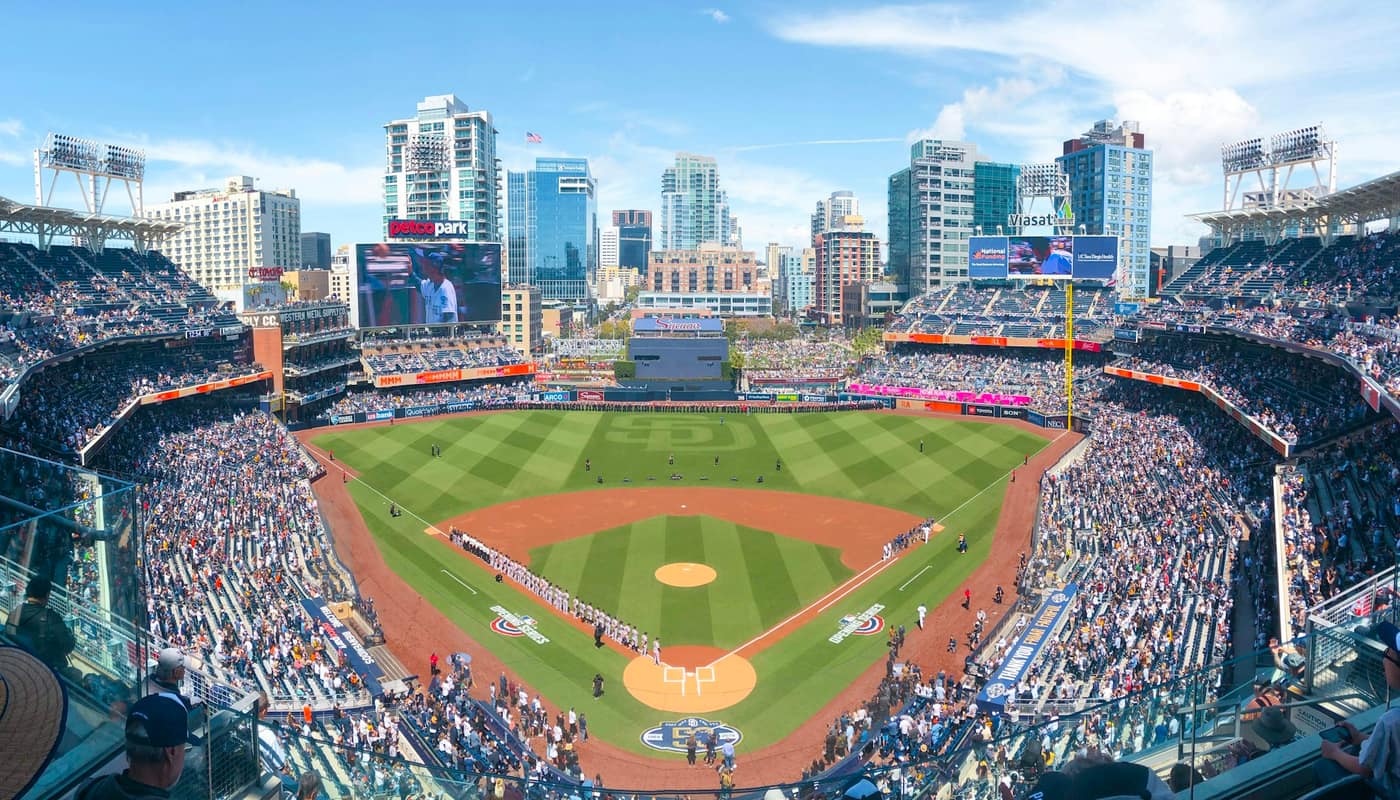
Few ballparks sit as close to the center of a city as Petco Park. Home of the San Diego Padres since 2004, it occupies a block of downtown’s East Village, a short walk from the Gaslamp Quarter, the convention center and the waterfront. Its design blends brick, steel and stucco with a preserved historic building, and its setting, with palm trees and a view of the skyline, gives it a distinct San Diego feel. For fans and visitors alike, a game there is as much about the neighborhood as about the baseball.
How did the ballpark come about?
The Padres played their first decades in a multipurpose stadium in Mission Valley, a different kind of venue that was shared with football. In the late 1990s, the team and city leaders began planning a baseball-only park downtown as part of a redevelopment effort for what was then a run-down district of warehouses and vacant lots. Voters approved a plan in 1998 that combined public and private financing and tied the stadium to redevelopment of the surrounding area. After years of debate and delay, including legal challenges, the park opened in April 2004.
The ballpark’s role in downtown revival has been widely discussed. It helped spur the growth of the East Village, with apartments, offices, hotels, restaurants and bars appearing nearby, and it anchors a district that now looks very different from the one that preceded it. The debate over public financing of sports venues remains a topic of discussion in many cities, and San Diego’s experience is part of it.
What is the Western Metal Supply Co. building?
The ballpark’s most distinctive feature is a historic brick building at its left-field corner. Built in the early twentieth century as a supply warehouse, the building was designated a historic landmark by the city in the late 1970s, which prevented it from being demolished. Rather than tear it down, the stadium’s designers incorporated it into the design. Its corner serves as the left-field foul pole, and its upper floors and rooftop offer seating and event space, while the ground floor houses the team store. The result is a ballpark with a sense of place that few new parks achieve.
What is the layout like?
The capacity is roughly 40,000, with published figures varying by year and configuration. The park has several features that fans mention:
- Park at the Park, a grassy hillside beyond the outfield with a view of the field, where fans can watch from a blanket or standing area, with a playground and small field for children.
- Open concourses, which let fans see the game while moving around.
- Skyline and bay views, especially from upper decks, where the downtown buildings and sometimes the harbor are visible beyond the outfield.
- Food and drink stands, which include local restaurants and breweries, as well as traditional ballpark fare, a nod to the region’s craft beer scene covered in the craft beer guide.
Seating sections and prices vary by game, with higher prices for premium games and promotions. The team’s website offers a seating chart and ticket information.
How do you get there by transit?
Because the ballpark is downtown, public transportation is one of the easiest ways to reach it. The Trolley’s Blue and Orange lines stop at the 12th and Imperial Transit Center near the main entrance, and the Green Line serves the Gaslamp Quarter station a few blocks away, as described in riding the Trolley and buses. The COASTER commuter train and Amtrak stop at the Santa Fe Depot, a short Trolley ride or walk from the park, which makes a train trip a good option for fans from north of the city, a service explained in riding the Pacific Surfliner. Some trains and special services are timed around home games.
Driving is possible, but parking downtown can be limited and expensive, and traffic is heavy before and after games. Many fans park farther away and walk or take transit. Rideshare drop-off areas are designated, and they can be congested at the end of the game, so a short walk to another pickup point can save time.
What should fans know before they go?
A few practical points make the day smoother.
- Check the schedule and weather. Evening games are common, and temperatures can drop after sunset, so a light jacket helps. The marine layer can make summer evenings cool.
- Review the bag policy. Stadiums often limit bag size, and rules change, so check the ballpark’s official guide before arriving.
- Plan for security lines. Arriving early shortens waits, and the gates open before the first pitch.
- Use mobile tickets. The team uses digital ticketing, so have a charged phone.
- Stay hydrated and use sunscreen. Afternoon games can be sunny even in cool weather.
- Explore the neighborhood. The East Village and Gaslamp offer restaurants and bars before or after games, and the waterfront is a short walk away.
What do games mean for downtown?
Baseball season brings tens of thousands of people downtown on game days, which supports local businesses, hotels and restaurants. The team is one of the region’s largest entertainment draws, part of the tourism and hospitality sector explored in the regional economy guide. The ballpark also hosts concerts, community events and other gatherings throughout the year, and the convention center next door shares the district. When both have events, the area can be very busy.
What is the Padres’ place in San Diego sports?
The Padres joined Major League Baseball in 1969 as an expansion team, and the club has played in the World Series twice. The team’s fan base is passionate and geographically wide, including many fans in Tijuana and across northern Baja California. San Diego has had a complicated history with professional sports, with teams coming and going, which gives the Padres a special place as the city’s long-standing major league franchise.
What are the traditions and food options?
Every ballpark has its own rituals, and Petco Park is no exception. Fans often arrive early for batting practice, when players are close to the stands, and many stay through the late innings, when the evening air cools and the downtown lights come on. Food choices go beyond hot dogs to include local taquerias, seafood stands and craft beer from regional breweries, and the neighborhood’s restaurants offer pregame meals within walking distance. Families can find programs for children and promotional nights throughout the season, and the team’s website lists the schedule and any giveaways.
How accessible is the park?
The ballpark is designed to be accessible, with elevators, ramps, accessible seating and restrooms, and assistance is available from staff. Fans who need accommodations can contact the ticket office ahead of time. Families can find sensory-friendly options and programs for children at some games.
Petco Park shows how a ballpark can be part of a city’s fabric. Whether someone is a devoted fan or a visitor who wants to see a game in a beautiful setting, the experience benefits from some planning and from time to walk the neighborhood around it.
Sources: San Diego Padres; City of San Diego; San Diego Metropolitan Transit System; Major League Baseball