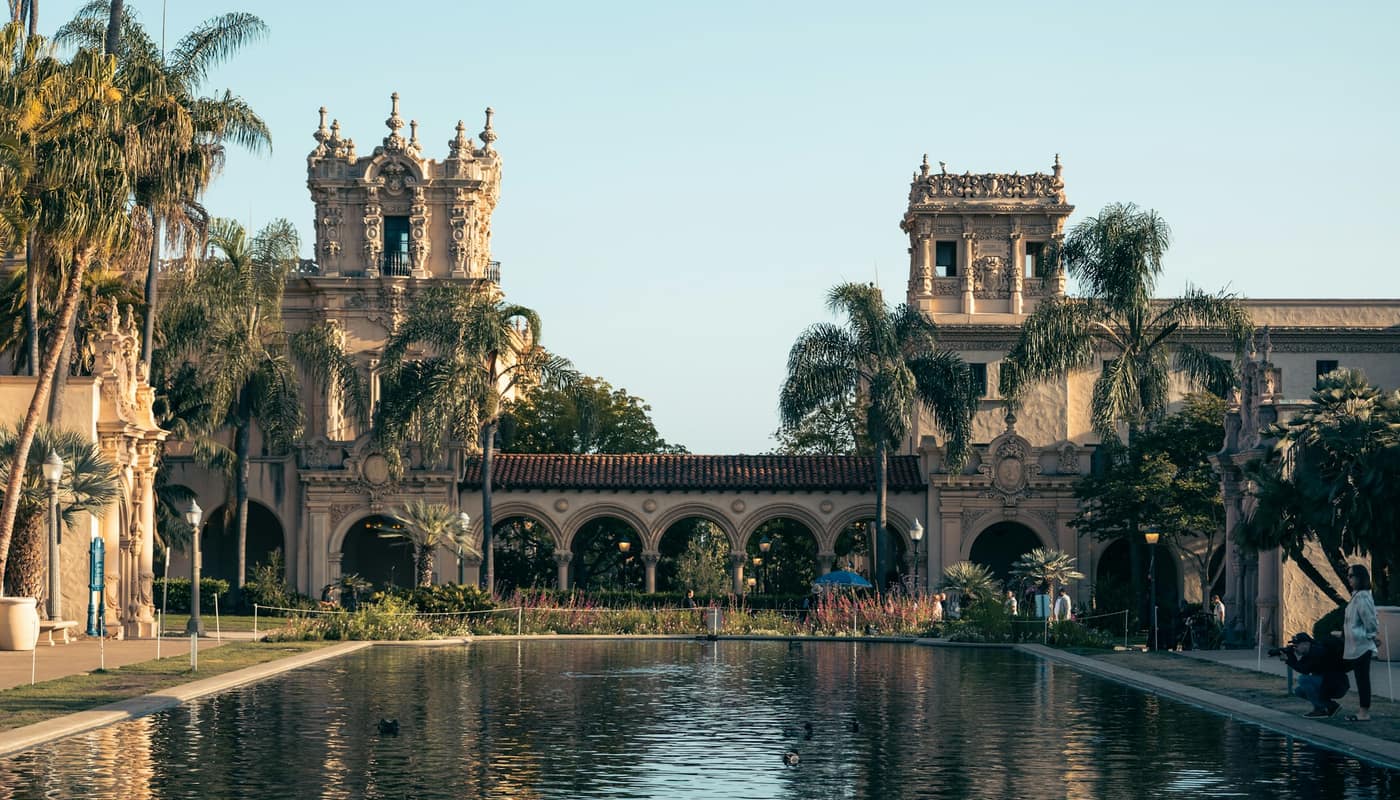
Few city parks do as many jobs at once as Balboa Park. It is a neighborhood green space where people jog and walk dogs. It is also a cluster of museums, a set of formal gardens, a home for theaters and a historic landmark district, all within a short walk of downtown. Its Spanish Colonial buildings, arcades and fountains make it one of the places in San Diego that looks most unlike anywhere else, and that look is the product of a particular moment in the city’s history.
How did the park get its shape?
The land was set aside in 1868, when city leaders reserved about 1,400 acres of mesas and canyons east of downtown as City Park. For decades it remained largely undeveloped. The park took on its current character because of two world’s fairs.
The first was the Panama-California Exposition of 1915 and 1916, held to celebrate the opening of the Panama Canal and to promote San Diego as the first American port of call north of the canal. The city renamed the park Balboa Park ahead of the fair and built a collection of ornate buildings in a Spanish Colonial Revival style along a central promenade called El Prado. Planners expected the buildings to be temporary. Many of them were so loved that residents kept them, and some were later rebuilt in permanent materials.
The second fair was the California Pacific International Exposition of 1935 and 1936, staged during the Great Depression to bring visitors and jobs to the city. It added buildings in a different, more varied style and gave the park some of the outdoor performance spaces and gardens that remain today. In 1977, the park’s historic exposition buildings and landscapes were designated a National Historic Landmark District.
What is where?
The park is large and divided into districts, and it helps to think of it in clusters.
- El Prado and the central mesa. The promenade is the park’s heart, lined with arcaded buildings that house museums, with the Plaza de Panama at its center. The Botanical Building, a lath-covered structure beside a reflecting pond filled with lilies, is among the park’s best-known sights, and the California Tower, with its tiled dome, is the park’s visual landmark.
- The Spreckels Organ Pavilion. The outdoor concert venue houses a large pipe organ, built for the 1915 fair, and the pavilion has long hosted free public concerts, typically on a regular weekly schedule.
- The Palisades and Pan-American Plaza. The area to the south of the Prado holds more museums and several buildings from the 1935 fair.
- Gardens. The Japanese Friendship Garden, the Alcazar Garden, the rose and desert gardens, and other planted areas offer quieter spaces.
- The theaters. The Old Globe complex, described in the guide to the Old Globe, sits in the park’s center.
- The San Diego Zoo. The zoo occupies a large section of the park’s north side, although it is run as its own organization and charges separate admission.
How many museums are there?
The number depends on the year and what is counted, but sources commonly describe about seventeen museums and cultural institutions in the park. They range from art museums and a natural history museum to institutions devoted to science, photography, model railroads, aviation and space, automotive history, and the history of San Diego. Individual museums set their own hours, prices and exhibits, and some offer free admission on certain days, so checking each one’s website before a visit matters more than relying on a general rule. Among the newer institutions is the Comic-Con Museum, tied to the convention described in the Comic-Con guide.
How should someone plan a visit?
A few practical suggestions follow from the park’s size.
- Pick a theme. Trying to see everything in a day leads to exhaustion. Two museums plus a garden is a comfortable plan, and a full day is enough for perhaps three or four stops.
- Start with the walk. The Prado is largely a pedestrian zone, and a slow stroll from one end to the other shows the architecture in around half an hour.
- Check hours and admission. Many museums close on one weekday, and some require timed tickets for special exhibits.
- Bring layers. Because the marine layer can blanket the city in early summer, as explained in May Gray and June Gloom, mornings can be cool and gray even when the afternoon is warm.
- Plan transportation. The park has several parking lots, and some days they fill up. Buses stop along the park’s edges, and walking from downtown is possible for those willing to climb a hill.
What does the park cost, and who runs it?
Entry to the park itself is free. The park is owned by the City of San Diego and managed by the Parks and Recreation Department, while many of the museums and cultural institutions are independent nonprofits that lease or occupy city-owned buildings. A nonprofit partner also coordinates programming and visitor services on behalf of the park’s institutions. That mix of public land and private operators explains why the park has so many different websites, ticket systems and hours.
Funding the upkeep of historic buildings is a continuing challenge. The buildings are more than a century old in some cases, and maintaining them takes city money, grants and donations. The city’s annual budget decisions, described in how the city builds its budget, shape how much goes to routine maintenance.
What else is worth knowing?
The park is also an everyday place. It has sports fields, picnic areas, dog parks, trails that dip into canyons, and neighborhoods along its edges, among them Hillcrest, North Park and Golden Hill. Many San Diegans know it first as the place for a weekend jog or a family picnic, and only later as a destination for culture. In the evenings and on weekends, street performers and musicians often use the plazas, and seasonal events draw crowds.
Accessibility has improved over the years, with ramps, elevators in some museum buildings and accessible parking, though the park’s age means some paths are steep or uneven. Visitors who need specific accommodations can check each institution’s accessibility page.
Are there events and free offerings?
Throughout the year, the park hosts festivals, outdoor concerts, holiday displays and seasonal garden shows, and several institutions offer free or discounted days for residents or for certain groups. Free organ concerts at the Spreckels Organ Pavilion are a long-standing tradition, and many visitors simply come to walk the grounds, which cost nothing. Because schedules change, the park’s official visitor site and each institution’s calendar are the best places to check what is on during a particular week. Families often combine a free stroll with one paid museum visit, which keeps a day affordable while still giving a taste of what the park offers.
Why the park matters
For a region often described by its beaches and its military, Balboa Park is a reminder that San Diego also has a civic and cultural side. Two world’s fairs left it a set of buildings that residents chose to preserve, and a century later those buildings still serve as the setting for art, science and performance. A single visit is rarely enough, which may be the best argument for coming back.
Sources: City of San Diego Parks and Recreation Department; Balboa Park Conservancy; San Diego Tourism Authority; National Park Service