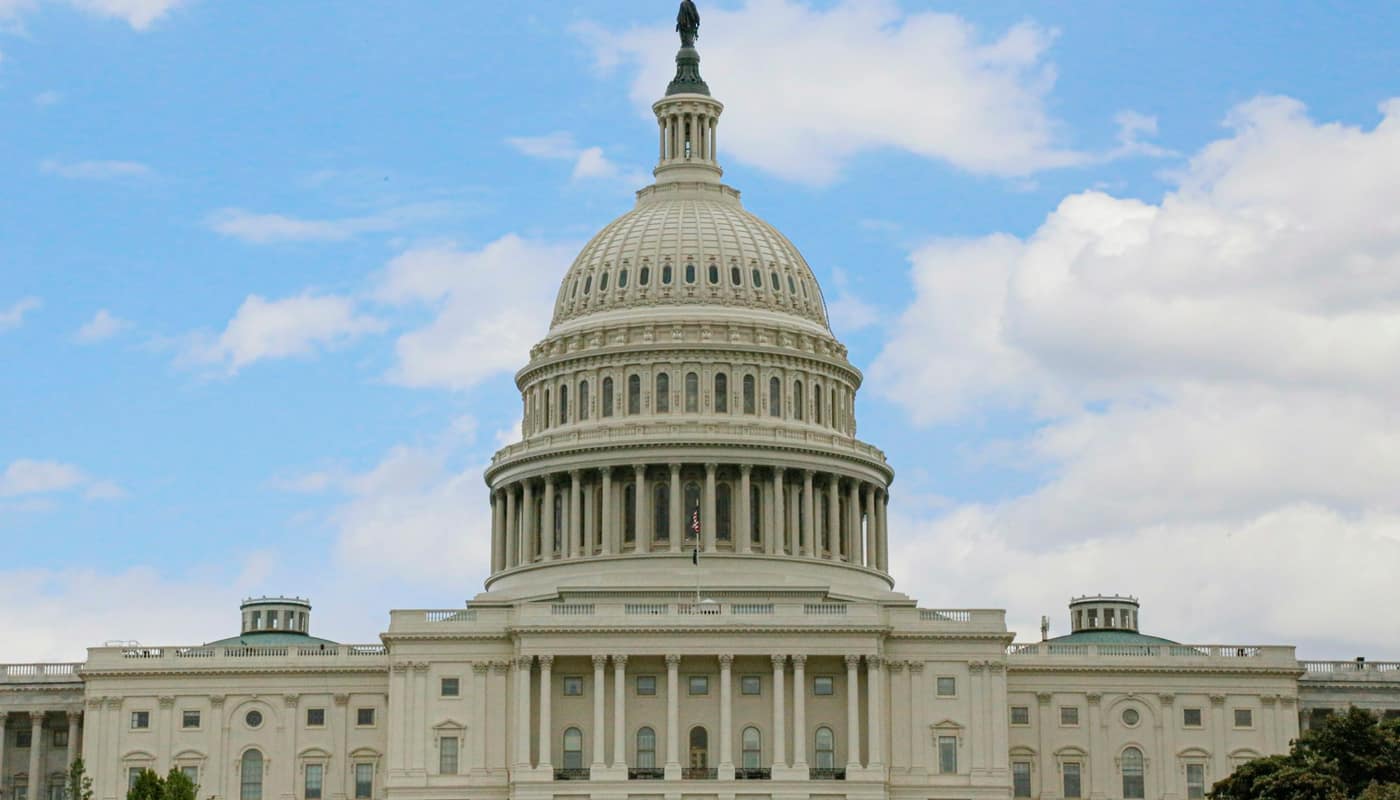
When the United States joins an international treaty, the headline often reads “Senate ratifies.” That phrase compresses a long and technical process, and it is not quite accurate, because the Senate does not itself ratify a treaty. The constitutional design splits the work between the president and the Senate, and the particular steps, vote thresholds and conditions have real consequences for what the country is bound to do. Understanding them clears up why some treaties pass quickly, why others stall for decades and why many international commitments never go to the Senate at all.
What does the Constitution say?
Article II, Section 2 of the Constitution gives the president the power to make treaties “by and with the Advice and Consent of the Senate,” provided two-thirds of the senators present concur. That sentence sets up a division of labor. The president, through the State Department and negotiators, negotiates and signs a treaty. The Senate then considers it and decides whether to give its advice and consent. If it does, the president may proceed to ratify the treaty, which is the formal act of expressing the United States’ consent to be bound.
The House of Representatives has no formal role in approving treaties, though it can be involved if a treaty requires legislation or funding to carry out.
What happens first?
Negotiation and signature come first. Signing a treaty does not make it binding. It shows that a government supports the text and, under international law, creates an obligation not to act in ways that would defeat its purpose while ratification is pending. After signing, the president decides whether to send the treaty to the Senate, and some are never sent. The treaty is transmitted with a message from the president and often an article-by-article analysis from the State Department.
In the Senate, the treaty is referred to the Foreign Relations Committee, which holds hearings, takes testimony from administration officials and outside experts and may hold a business meeting to vote. The committee can report the treaty favorably, with changes, or decline to act. Many treaties sit in committee for years. Some of the most notable sat there for decades without a vote.
What is the resolution of ratification?
If the committee reports a treaty, it goes to the full Senate. A detail surprises many readers: the Senate does not vote on the treaty itself. It votes on a resolution of ratification, which states that the Senate advises and consents to ratification, subject to any conditions it attaches. The treaty text cannot be changed by the Senate acting alone, since it was negotiated with other countries, but the Senate can attach conditions that shape how the United States carries it out.
Those conditions take several forms:
- Reservations, which modify or exclude the legal effect of certain provisions as applied to the United States.
- Understandings, which state the Senate’s interpretation of the treaty’s terms.
- Declarations, which express positions or policies on matters related to the treaty.
- Provisos and conditions, which can require the president to take certain actions before or after ratification.
Reservations can be controversial, since other parties may object, and in some cases they can reduce the practical effect of a treaty. Amendments to the resolution, including those adding conditions, require only a simple majority. The final vote on the resolution is where the two-thirds threshold applies.
What is the two-thirds rule?
The final vote on a resolution of ratification requires two-thirds of the senators present and voting, assuming a quorum. With all 100 senators voting, that means 67 votes. The threshold is deliberately high, designed by the framers to require broad agreement before the country made binding commitments. It means that a determined minority, one-third plus one, can block a treaty, and it has done so on several occasions.
The most famous example is the Treaty of Versailles after World War I, which the Senate declined to approve in 1919 and 1920, keeping the United States out of the League of Nations. Other treaties have been approved easily, particularly those with broad bipartisan support, such as many tax and trade agreements and alliance treaties.
Senate procedures also matter. Treaties are subject to the Senate’s rules on debate, including cloture, which can limit debate, and the Senate may take them up in executive session. The Senate’s calendar and priorities affect how fast they move.
What happens after the Senate votes?
Senate approval is only the middle step. After the Senate adopts the resolution of ratification, the president decides whether to proceed, and if so, signs an instrument of ratification and, depending on the treaty, exchanges or deposits it with the other parties or a depositary. The treaty enters into force according to its own terms, which may require a certain number of countries to ratify or may set a delay.
A treaty can be “self-executing,” meaning it has the force of domestic law on its own, or “non-self-executing,” meaning Congress must pass implementing legislation before it takes domestic effect. Courts have applied that distinction in many cases, and the Senate can state in its resolution whether it considers a treaty self-executing.
How are treaties different from other agreements?
Many international commitments never go through the Senate treaty process. The United States makes a large number of international agreements each year, and most of them are not treaties in the constitutional sense. They include:
- Congressional-executive agreements, which are approved by a majority of both houses of Congress, often used for trade deals.
- Executive agreements based on existing treaties or statutes, in which Congress or an earlier treaty has already authorized the president to act.
- Sole executive agreements, made under the president’s own constitutional powers, such as over military command or diplomacy.
Scholars and lawmakers debate how far these alternatives can substitute for treaties. Some argue that the Senate’s role has eroded, and Congress has passed laws requiring that certain agreements be reported to it. The choice of form can matter, since a treaty that passes with two-thirds is harder to enact but also harder to unwind than an agreement the president can reverse.
Forums such as APEC, covered in what APEC is, operate through non-binding consensus and so do not require Senate approval at all. International courts add another layer: the United States has not joined the treaty that created the International Criminal Court, a distinction explained in the ICC and ICJ comparison.
How does withdrawal work?
The Constitution does not say how a treaty is ended, and practice has varied. Presidents have withdrawn from treaties on their own in many cases, relying on the terms of the treaty, which usually provide a notice period, while others have argued that Congress or the Senate must approve withdrawal. Courts have generally avoided deciding the question. The debate has come up in connection with several arms-control and international agreements, and with membership in organizations, such as the one discussed in what the World Health Organization does.
How to follow a treaty
Congress.gov lists treaties pending before the Senate, with their status, text, committee reports and votes. The State Department publishes the list of treaties in force and the text of agreements, and the Congressional Research Service produces plain-language reports on the process. A reader who sees a news item about a treaty can ask a few simple questions: Has it been signed, or ratified? Is it before the Senate or still with the president? Are there conditions attached? And is it a treaty or another kind of agreement? The answers reveal exactly where the commitment stands.
Sources: U.S. Constitution Article II; U.S. Senate; Congressional Research Service; U.S. Department of State Office of the Legal Adviser