Every year, leaders from across the Pacific Rim gather for a summit that produces photographs, joint statements and long lists of commitments. The meeting belongs to the Asia-Pacific Economic Cooperation forum, usually abbreviated APEC, and it is one of the world’s most visible regional economic gatherings. Yet APEC is also one of the least understood, partly because it does not look like a conventional international organization. It does not write binding treaties, enforce rules or impose penalties. Its influence works through a different mechanism, and understanding it explains both what APEC can and cannot do.
How did APEC start?
APEC was established in 1989, when representatives of 12 Asia-Pacific economies met in Canberra, Australia, at a time when trade among Pacific countries was growing quickly and many wanted a forum to support that growth. The founding members were Australia, Brunei, Canada, Indonesia, Japan, South Korea, Malaysia, New Zealand, the Philippines, Singapore, Thailand and the United States. The forum began as a series of ministerial meetings and grew into a leaders’ summit in 1993, when the United States hosted the first gathering of economic leaders near Seattle.
Membership has since expanded. Today APEC has 21 members, including China, Hong Kong, Taiwan, Mexico, Chile, Peru, Russia, Papua New Guinea and Vietnam, which joined in 1998. A small secretariat based in Singapore supports the work.
Why does APEC say “economies” instead of “countries”?
The term is deliberate. APEC’s membership includes places whose political status is contested or distinct, notably Hong Kong, which participates under the name Hong Kong, China, and Taiwan, which participates as Chinese Taipei. Calling them “member economies” lets the forum focus on trade and economic questions without requiring agreement on sovereignty. It is a pragmatic compromise that has allowed everyone to remain at the table.
How does APEC make decisions?
APEC operates by consensus and its commitments are voluntary and non-binding. The forum has no power to impose obligations, and members carry out agreed goals through their own domestic laws and decisions, a style sometimes described as “concerted unilateral action.” Its work is structured around a yearly cycle. A host economy, rotating among the members, sets the theme and chairs meetings throughout the year, including meetings of senior officials, sectoral ministers and, at the end of the year, the leaders. The host in 2026 is China, with the leaders’ meeting scheduled for Shenzhen in November, according to the host’s announcements.
The consensus rule has strengths and weaknesses. It lets members with very different economies and political systems cooperate and keeps the forum flexible. But it also means that APEC statements are only as strong as the willingness of members to follow through, and the forum can stall when members disagree.
What does APEC actually produce?
The most visible product is the leaders’ declaration, a joint statement released at the end of the summit. Beyond that, the forum works on practical projects that rarely make headlines:
- Trade facilitation. APEC has worked to simplify customs procedures, reduce paperwork and make rules more predictable, which can lower the costs of moving goods across borders.
- The APEC Business Travel Card. The card lets approved business travelers use fast-track lanes at airports and obtain multiple-entry visas in participating economies.
- Regulatory cooperation. Working groups share best practices on standards, product safety, digital trade and other matters.
- Economic data and research. The forum publishes reports on regional trade, investment and growth.
- Development programs. APEC supports projects to help smaller businesses, women entrepreneurs and rural communities benefit from trade.
Over the years APEC has set long-term goals. The Bogor Goals, adopted in Indonesia in 1994, called for free and open trade and investment in the region by target dates for developed and developing economies. A later vision, adopted in 2020, set a framework through 2040 that emphasizes inclusive, sustainable growth and innovation. Measuring progress against these goals is difficult, and critics argue that the commitments have often been aspirational.
Why does it matter to San Diego?
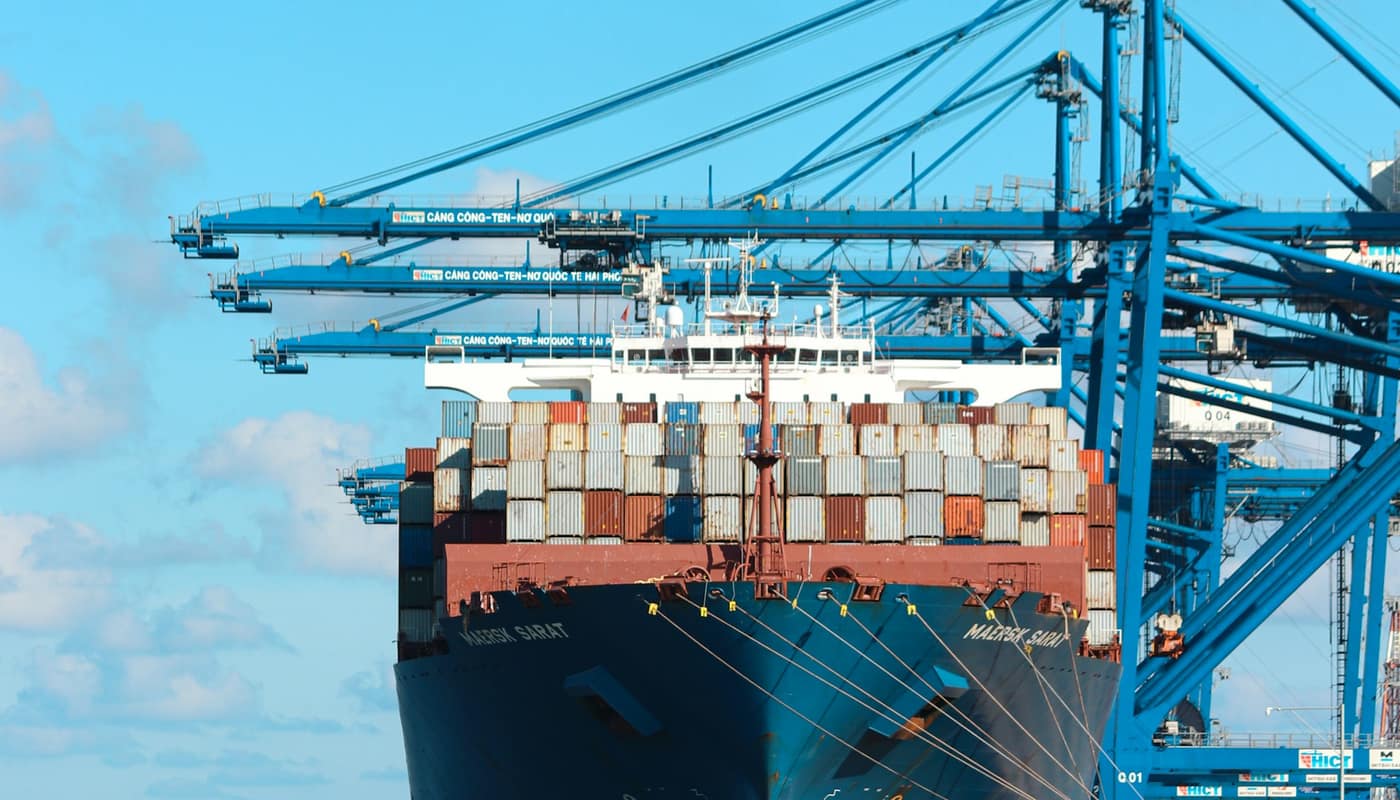
San Diego’s economy is closely linked to the Pacific Rim and to Mexico, an APEC member. The Port of San Diego handles cargo from across the Pacific, as described in what the Port manages, the region’s biotechnology and technology firms sell to customers and partners in Asia, and its universities draw students and researchers from around the Pacific. The forum’s work on customs procedures, standards and digital trade can affect costs and opportunities for local firms, a connection explored in the regional economy guide.
The relationship with Mexico adds another dimension. Crossings between San Diego and Tijuana carry a large volume of trade, and issues such as border efficiency are part of the broader conversation about trade facilitation, a theme in how the San Ysidro crossing works.
How has the United States engaged with APEC?
The United States has hosted APEC leaders several times, including in Honolulu in 2011 and San Francisco in 2023. U.S. participation is led by the executive branch, with the White House, the State Department and the Office of the U.S. Trade Representative involved. Because APEC does not produce binding agreements, it does not require congressional approval, in contrast to treaties that go through the Senate, a process explained in how the Senate ratifies treaties. Cooperation through APEC can influence U.S. trade policy and complement agreements negotiated elsewhere.
How do the leaders’ meetings work in practice?
The annual summit is the tip of a year-long process. Senior officials meet several times, working groups prepare technical papers, and ministers responsible for trade, finance, health, small business and other subjects meet separately. Alongside the leaders’ meeting, business executives gather at a CEO summit, and the host often organizes side events for civil society and young entrepreneurs. Bilateral meetings on the sidelines can matter as much as the formal sessions, since leaders of major economies use the occasion for private talks. The final declaration is drafted by officials in advance and negotiated line by line, which is why language is often carefully hedged.
What are the criticisms?
Skeptics raise several concerns. One is that the forum is a talk shop that produces statements without enforcement. Another is that its membership includes economies with very different political systems and economic interests, which can limit how much can be agreed. A third is that its emphasis on free trade has been questioned by people who worry about effects on workers and the environment. Supporters respond that the voluntary approach is a feature, because it allows countries to experiment and cooperate without surrendering sovereignty, and because informal contacts among officials can solve problems before they become disputes.
How to follow APEC
APEC’s website posts the schedule of meetings, ministerial statements and leaders’ declarations, along with research and project reports. Following the host economy’s priorities each year gives a sense of what will be on the agenda. Readers who want to evaluate the forum’s impact can compare its stated goals with changes in tariffs, customs times and trade volumes in the region, remembering that APEC is one influence among many.
Sources: Asia-Pacific Economic Cooperation Secretariat; Office of the United States Trade Representative; U.S. Department of State